Improve your fleet safety
Without measurement, safety rests on the complaints you receive and the incident reports you file. At-risk drivers then get identified after the fact, which is precisely too late.
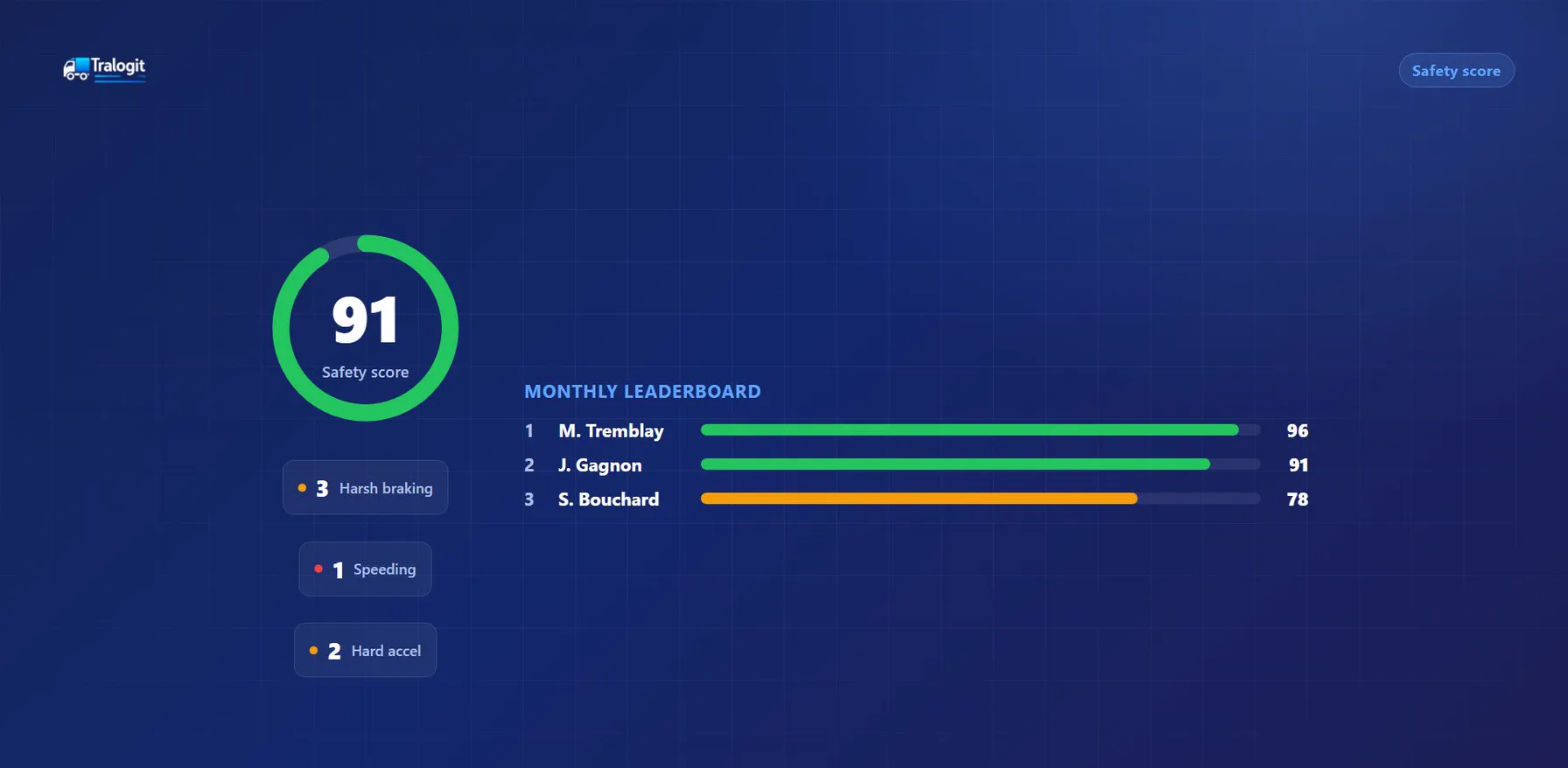
The events Tralogit measures
Each event is captured automatically and attached to the assigned driver and the trip in progress. There is no manual entry, so no reporting bias.
- Hard braking
- Harsh acceleration
- Sharp cornering
- Speeding
- Extended idling
- Driving outside scheduled hours
The safety score, and what not to do with it
The score aggregates events over a period and normalises them against distance driven, so a driver covering 4,000 km a month is not penalised against one covering 800.
A score is a conversation tool, not a disciplinary one. Fleets that use it to punish get drivers who learn to game the measurement. Fleets that use it to target coaching get drivers who improve.
What the data actually changes
- Target the coaching: Coach the three drivers involved rather than all forty.
- Recognise good results: A monthly ranking makes visible what rarely is.
- Document the programme: A maintained safety record counts in discussions with an insurer.
- Follow a trend: A six-month trajectory says more than a single figure.
Safety, compliance and vehicle condition
A safety programme is not limited to behaviour behind the wheel. Licence and certification expiry, daily inspections and the mechanical condition of the vehicle belong to the same file. A brake flagged three weeks running in the inspections is a safety matter, not just a maintenance one.
Adding video, where the context justifies it
Telematics events tell you a hard brake happened. They do not tell you why. An ADAS/DMS camera supplies that context, at the cost of privacy obligations and a conversation to hold with the driving team before installation.
Frequently asked questions
How is the safety score calculated?
Is a camera required to track driving behaviour?
Do drivers see their own score?
See the Tralogit platform
Centralise your fleet data and turn it into information your operation can act on.
Request a demo