Take control of your fleet fuel costs
Analyse consumption and utilisation data to understand where your fuel actually goes.
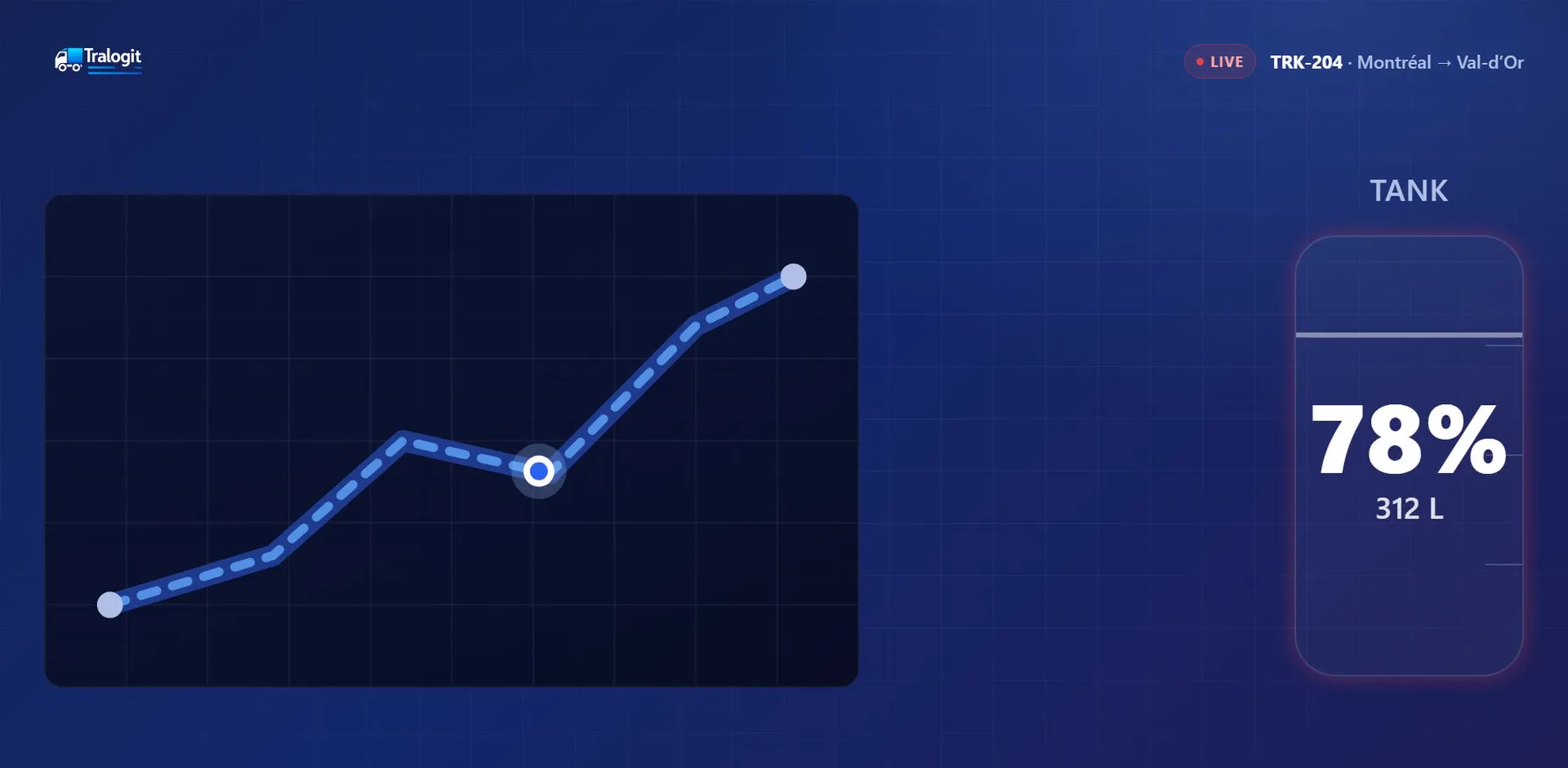
Track consumption per vehicle
Depending on the data available for each vehicle, Tralogit brings together the elements that make up real fuel cost.
- Consumption
- Fuel level
- Cost
- Distance travelled
- L/100 km
- Engine hours
Identify engine idling
Look at the periods where the engine runs without meaningful movement, then compare idling across vehicles, drivers, periods and sites.
Spot anomalies
An unusual variation deserves a closer look. Tralogit surfaces those gaps instead of letting them go unnoticed until month end.
- High consumption
- Unusual drop in level
- Inconsistent odometer
- Atypical usage
- Long idling periods
An anomaly flags a gap worth checking. On its own it is not proof of theft.
Compare cost per vehicle
Tie fuel spend back to operating data to understand what each asset really costs to run.
Measure before optimising
The first step in reducing cost is having data you trust and can compare over time. Without a baseline, a claimed saving cannot be verified.
Frequently asked questions
How is vehicle fuel consumption calculated?
Can engine idling be detected?
Can fuel theft be detected?
See the Tralogit platform
Centralise your fleet data and turn it into information your operation can act on.
Request a demo