Fleet telematics: turn your vehicles into usable data
Telematics combines location data with information coming from the vehicle itself, for a fuller picture of your operation.
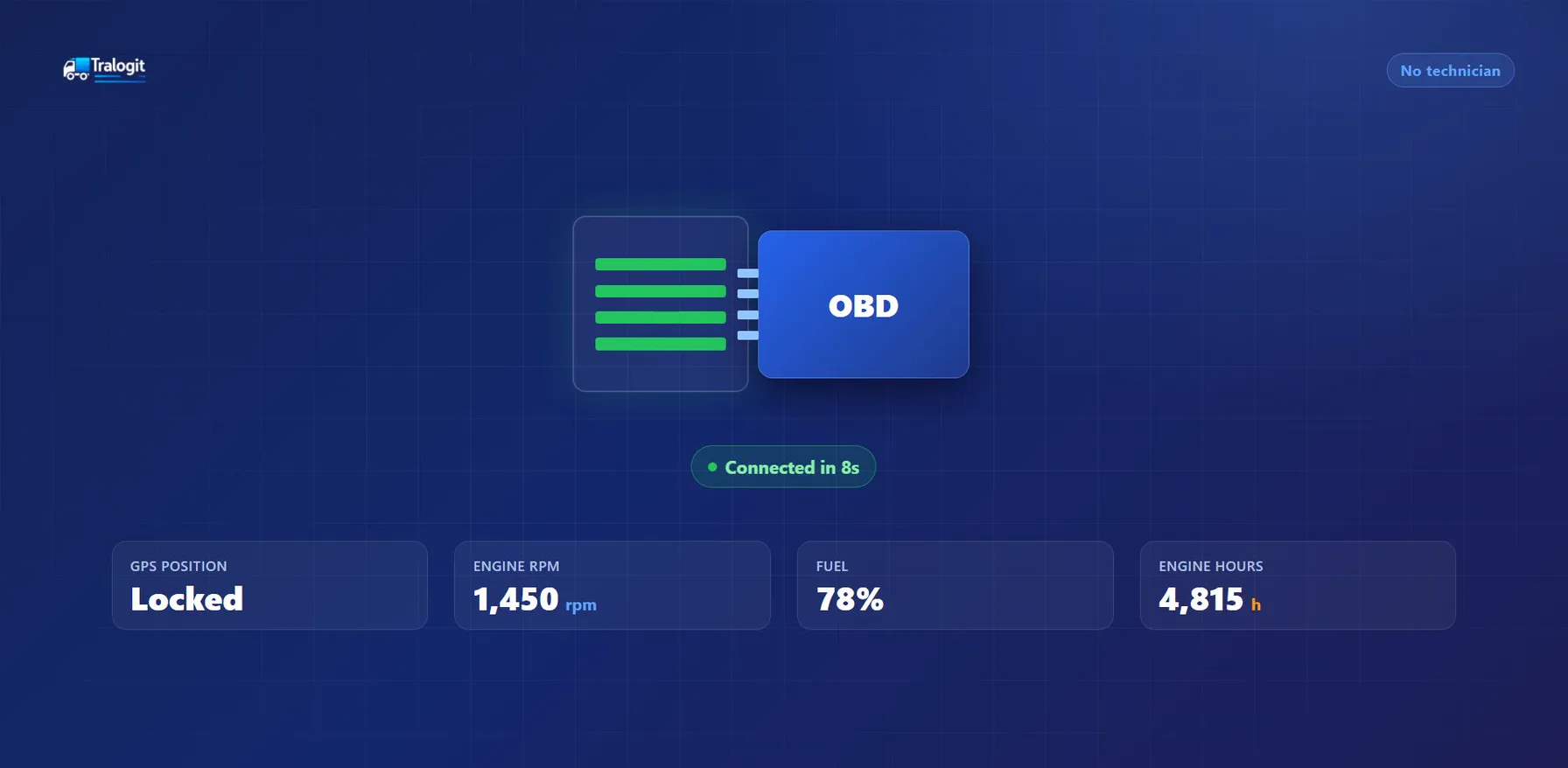
What data can be collected?
Depending on the vehicle, the installed device and the available interface, telematics can report some or all of the following.
- GPS position and speed
- Odometer
- Engine hours
- Engine RPM
- Fuel level or consumption
- Battery voltage
- Engine temperature
- Fault codes
- Ignition state
Not all of this data is available on every vehicle. What you actually get depends on the model, the year and the electronic architecture.
GPS, OBD-II, J1939 and other interfaces
Vehicles do not all share the same architecture. The 16-pin OBD-II connector is fitted to many light vehicles and some commercial ones. Heavy vehicles frequently use SAE J1939, often over a 9-pin or 6-pin Deutsch connector. Others rely on an FMS interface, the J1708 protocol or a manufacturer-specific integration.
Why use telematics?
- Cut manual tracking: Odometer readings and some operational data are captured automatically.
- Plan maintenance better: Odometer and engine hours can trigger service schedules.
- Understand utilisation: Compare activity, movement and running time across vehicles.
- Surface anomalies: Fault codes and other parameters help flag what deserves a closer look.
From telematics to maintenance
Engine hours and odometer values collected automatically feed your service intervals, so nobody re-enters meter readings by hand every week.
From telematics to fuel management
Consumption, idling and distance data make fuel cost comparable across vehicles, drivers and periods.
Frequently asked questions
What is fleet telematics?
What is the difference between GPS and telematics?
Do all trucks use J1939?
See the Tralogit platform
Centralise your fleet data and turn it into information your operation can act on.
Request a demo